Contact Us

What Actually Makes an IPTV Subscription Worth Paying For (7 Things That Matter)
I get asked the same question most weeks. Someone wants the best IPTV subscription and they want a straight answer, not a wall of marketing copy. Fair enough. After years of testing panels, comparing uptime logs and listening to what customers actually complain about, the honest answer is that “best” depends on three things: reliability, channel accuracy and how the provider handles it when something breaks.
A subscription that streams flawlessly for a week and then dies during a football final isn’t the best IPTV subscription, no matter how cheap it looked at checkout. What separates a genuinely good service from a forgettable one is consistency you don’t have to think about.
A Straight Comparison of What Good Providers Get Right
Rather than throw brand names at you that I can’t fully verify from where you’re sitting, it’s more useful to compare the service tiers you’ll actually encounter when shopping for the best IPTV subscription. Providers tend to fall into a handful of recognizable categories, and each one trades off differently.
| Provider type | Reliability | EPG accuracy | Sport performance | Best value for |
|---|---|---|---|---|
| Budget specialist | Moderate | Basic | Weak under load | Casual single viewer |
| Sports-focused premium | Strong | Good | Excellent | Match day households |
| Family multi-device plan | Strong | Good | Solid | Multiple screens, mixed viewing |
| Regional/local channel focus | Moderate to strong | Excellent | Not a priority | Viewers wanting UK/local stations |
| Enterprise-grade premium | Excellent | Excellent | Excellent | Heavy users wanting zero compromise |
None of these categories are inherently the best IPTV subscription for everyone. A sports-focused premium plan is wasted money on someone who only watches the news, and a budget specialist option isn’t going to survive a Champions League night without buffering. Match the type to how you actually watch, not to whichever one has the flashiest homepage.
If one of these sounds like your setup, the quickest next step is a short trial rather than more reading.
Price Versus Channel Count: What You’re Really Paying For
Here’s a question worth sitting with for a second. Would you rather have 20,000 channels where half are dead links, or 4,000 channels that all actually work? I know which one I’d choose, and I suspect you would too.
Channel count is the easiest number for marketing pages to inflate, and it’s the least useful metric on its own. What matters is whether the channels you’ll actually watch, news, sport, a few kids’ channels, your regional stations, stay live and in sync.
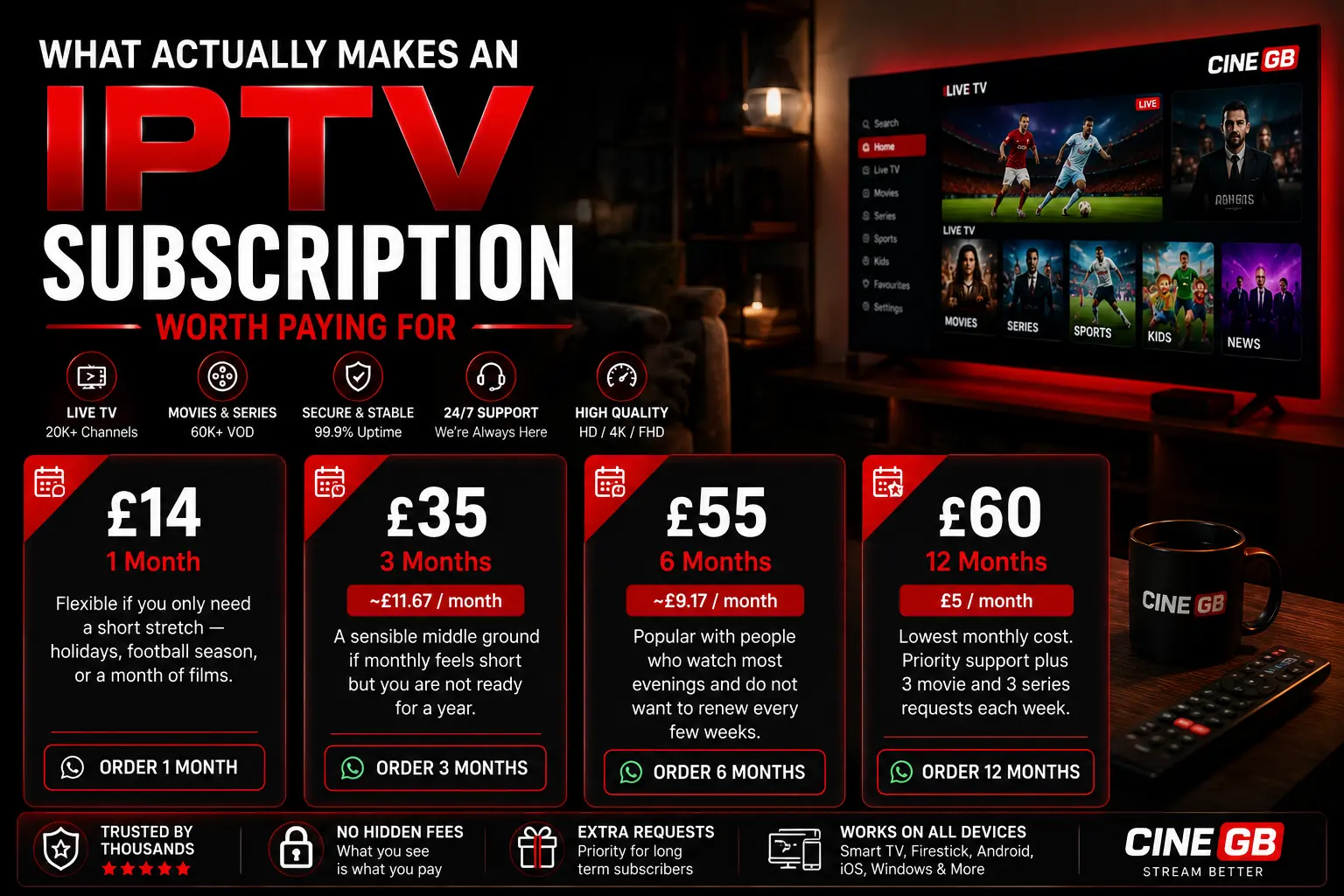
The table below gives a rough sense of typical market ranges observed in 2026. Pricing shifts often, so treat these as indicative rather than fixed.
| Plan tier | Typical monthly cost (2026, indicative) | Devices | Best suited for |
|---|---|---|---|
| Entry | £8 to £12 | 1 to 2 | Single household, casual viewing |
| Standard | £13 to £18 | 2 to 3 | Families, mixed sport and entertainment |
| Premium | £20 and up | 4 or more | Heavy sport, multi room setups |
That pricing isn’t a fixed rule though. I’ve seen premium tier pricing from providers that cut corners on servers, and I’ve seen well run standard tiers outperform them on stability. Price is a starting filter, not a guarantee.
EPG, Buffering and the Small Print Nobody Reads
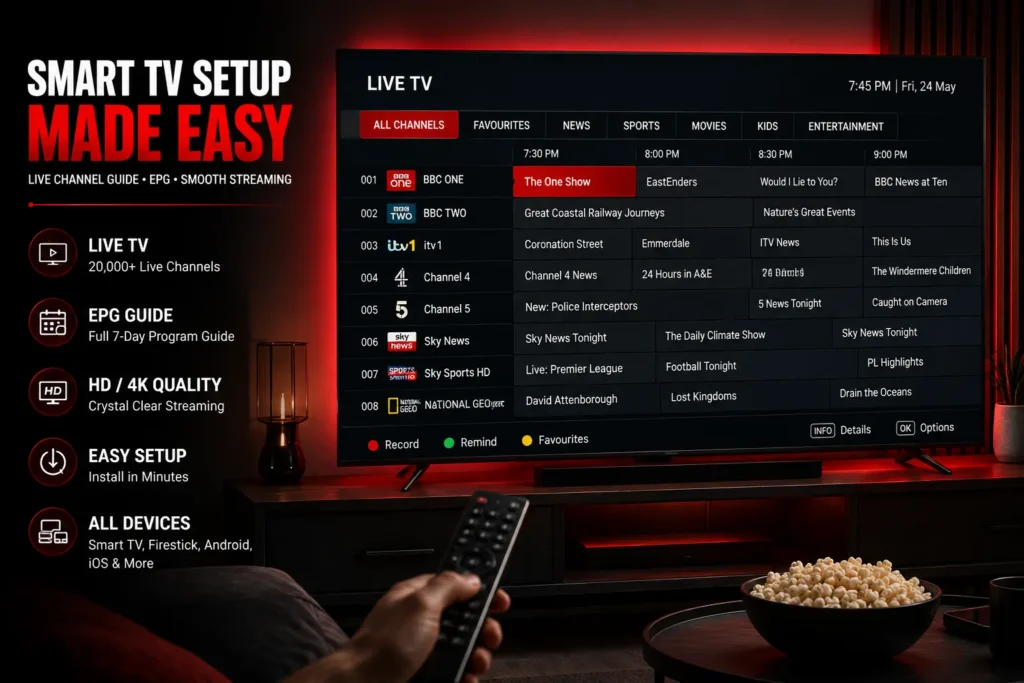
Nobody signs up for the best IPTV subscription expecting to fight with the electronic programme guide, but it happens more than providers admit. A mismatched EPG means you’re scrolling through listings that don’t line up with what’s actually airing, which turns a relaxed evening into a small headache.
Buffering is trickier to pin down than most people assume. Overloaded servers during peak hours are a common cause, but Wi-Fi congestion, your own ISP’s routing, an older streaming box, or app settings can all play a part too. If buffering only happens to you and nobody else in the household, the problem is more likely local than the provider’s fault.
I’d genuinely recommend testing any provider during a busy Saturday before committing to a full year. If a service holds up when everyone else’s does too, that’s a far better signal than a quiet Tuesday afternoon test.
iptv service reliability checklist → /iptv service
Reseller Panels and Why They Matter More Than You Think
Here’s something most subscriber guides skip entirely. A lot of what makes a provider good or bad traces back to how their reseller panel is run behind the scenes. A well managed iptv reseller panel means faster credit reconciliation, quicker line replacements when something dies, and resellers who can actually fix problems instead of just forwarding tickets.
I’ve spent enough time on the operator side of this to know that a chaotic panel eventually shows up as a chaotic customer experience. If a reseller can’t tell you within minutes whether a line is active, that instability tends to trickle down to you.
choosing a reliable iptv reseller panel → /iptv reseller panel
How I Test an IPTV Subscription Before Recommending Anything
I don’t take a provider’s word for anything. Before I’d call something the best IPTV subscription available, it goes through a fairly boring but honest process.
- Run it across three devices simultaneously during peak evening hours
- Check EPG accuracy against the actual broadcast schedule for at least a week
- Test a support ticket with a genuine question, not a scripted one
- Watch how it performs specifically during a major live sporting event
- Confirm channel lists still match what was advertised a month later
Even with that process, no service comes back flawless. The strongest ones I’ve tested still show small dips in EPG accuracy around holiday schedule changes, and even the best sport-focused plans occasionally stumble on a night when demand spikes across the whole industry, not just one provider. That’s worth knowing before you commit to anything, because the goal isn’t perfection, it’s consistency.
A Quick Word on Legality
Worth saying plainly. IPTV as a technology is entirely legal, it’s simply a method of delivering television over the internet. What matters is the content being streamed and whether the provider holds proper rights to distribute it. Reputable providers are transparent about their licensing, so it’s worth asking directly if you’re unsure, rather than assuming every service operates the same way.
Mistakes People Make When Choosing an IPTV Subscription
The most common mistake is chasing the lowest price without checking anything else. I understand the appeal, but a subscription that saves you three pounds a month isn’t worth it if you’re missing half your matches.
The second mistake is ignoring trial periods entirely. Any provider confident in their service should let you test before a long commitment, and hesitation there tells you something.
The third, and this one surprises people, is not asking how refunds or replacements work before something goes wrong. By the time you need that answer, it’s usually too late to negotiate.
Would you buy a car without checking if it starts on a cold morning? Choosing the best IPTV subscription without a proper trial run is a similar gamble, just with less obvious warning signs upfront.
Ready to Stop Guessing and Just Test One
All the criteria above only matter once you actually try a service on your own setup. The fastest way to know if a provider fits your household is a short trial, not another comparison article.
If you’re ready to see how a properly managed setup performs on your own devices, start with a trial period and run it through a busy weekend before deciding anything long term. That’s the same test I use, and it tells you more in three days than any review can.
start a free IPTV trial → /Iptv free trial
Frequently Asked Questions
What is the best IPTV subscription for watching live sport specifically?
Sports-focused premium plans with strong server redundancy across multiple regions tend to handle live sport best, since that’s when demand spikes hardest. Look for services that are transparent about capacity during major fixtures rather than just general marketing claims. A short trial during a big match weekend is the clearest test.
How much should a good IPTV subscription actually cost?
Reasonable pricing generally sits between £10 and £20 a month depending on device count and channel range, though this shifts over time. Anything significantly cheaper than the going rate often cuts corners on server capacity or support. Price alone shouldn’t be the deciding factor.
Is the best IPTV subscription always the one with the most channels?
Not necessarily, and this trips a lot of people up. A smaller, well maintained channel list that stays live beats a bloated one full of dead links. Focus on whether the channels you’ll actually watch are consistently working.
Can I switch providers if my IPTV subscription keeps buffering?
Yes, and you generally should if buffering persists after ruling out your own connection first. Most reputable providers offer short trials specifically so switching doesn’t feel like a financial risk. Persistent buffering affecting your whole household usually points to server issues on the provider’s end.
Do IPTV subscriptions work on smart TVs and firesticks equally well?
Most modern subscriptions support both, though app compatibility can vary slightly by device. It’s worth checking which app the provider recommends for your specific hardware before signing up. A provider offering setup support for your exact device is generally a safer bet.