
Contact Us

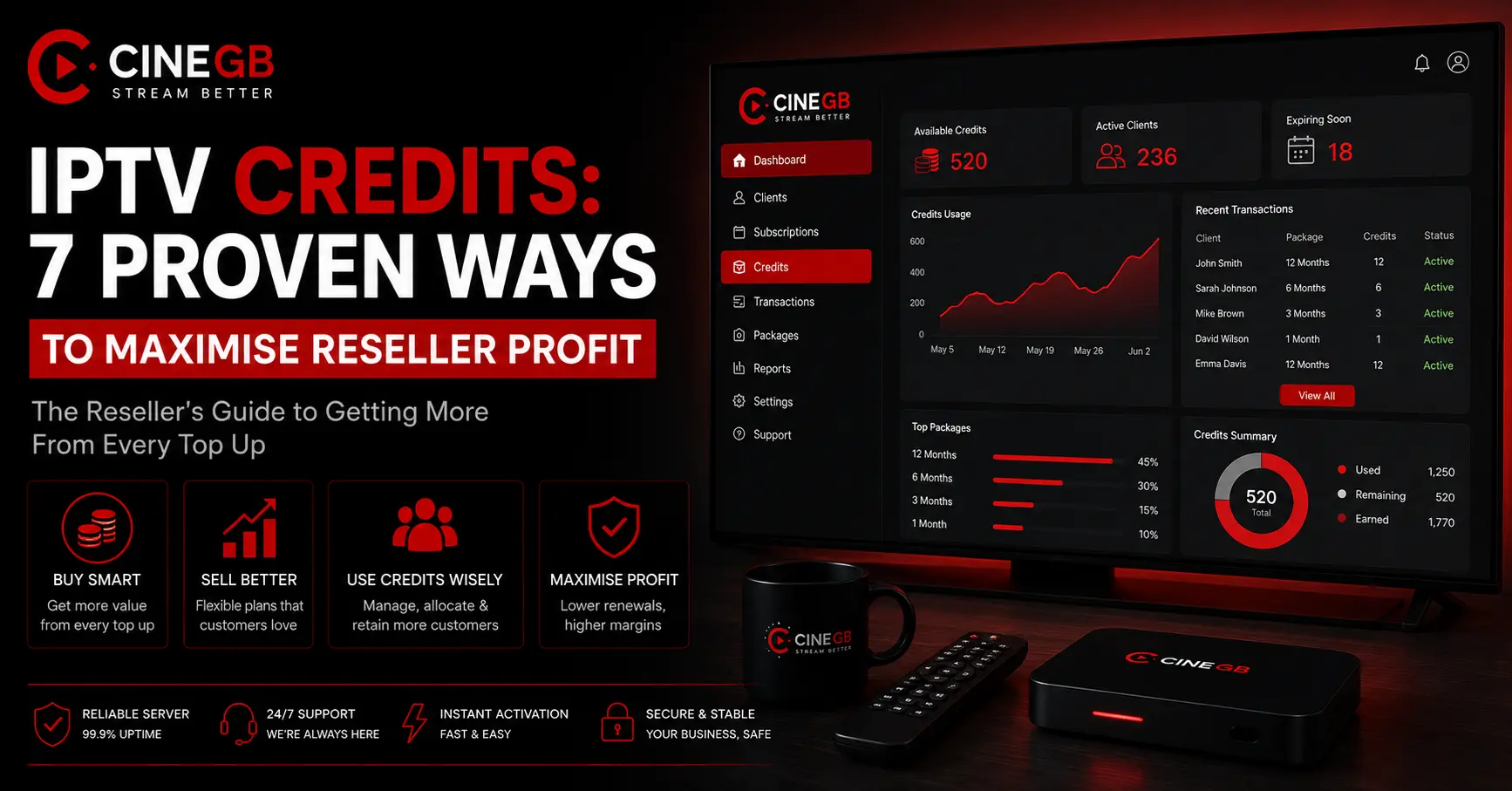
IPTV Credits: The Reseller’s Guide to Getting More From Every Top Up
I still remember the first time someone asked me to explain IPTV credits in plain English, and I genuinely fumbled it. Fifteen years in this industry and I’d been using the term so casually that I’d forgotten most people outside the reseller world have no idea what it means. So let’s fix that properly, without the jargon.
If you’ve spent any time researching an iptv reseller setup, you’ve probably seen IPTV credits mentioned everywhere, usually with very little explanation attached. That gap in understanding costs people money. It leads to bad panel choices, wasted top ups, and resellers who quietly give up after a few frustrating months.
What Are IPTV Credits, Really?
Think of IPTV credits as a prepaid currency that only works inside one specific ecosystem, your reseller panel. You buy a batch of them from your panel provider, and each credit lets you activate or renew one subscriber’s line for a set period, usually a month.
They aren’t cash. You can’t spend them anywhere else, and they don’t carry any value once you leave that particular panel. That’s a detail newcomers miss constantly.
Here’s a fair question worth asking yourself before you buy your first batch: would you rather hold ten credits with a reliable panel, or fifty with one that keeps going offline? I know which one I’d pick, and it isn’t the bigger number.
How the Credit System Actually Works
Panel providers issue IPTV credits in bulk to resellers at a discounted rate compared to what an individual subscriber would pay directly. You load your account, and from that point on, activating a new customer costs you a fixed number of credits rather than a cash transaction each time.
Most panels use a simple deduction model. One credit typically equals one month of service for one connection, though pricing tiers vary depending on stream quality, number of connections allowed, and whether the panel bundles catch up or VOD libraries.
Renewals work the same way. When a customer’s month runs out, you spend another credit to extend their access, which is why keeping a healthy credit balance matters more than people expect when they’re starting out.
Why Resellers Live and Die by Their IPTV Credits
This is the part that surprised me most when I first got close to this business. Your margin isn’t really about your retail price, it’s about how cheaply you can source IPTV credits and how efficiently you use them.
A reseller buying credits at a poor rate, then losing customers to churn, ends up in a nasty cycle. You’re spending credits on activations that don’t stick, and your effective cost per retained customer climbs fast. It’s not dramatic, it’s just quiet erosion of profit that’s easy to miss until you actually run the numbers.
I’ve watched people build what looked like a decent side income purely from an iptv reseller panel, only to realise six months in that their credit cost had crept up while their retail pricing stayed flat. Nobody notices that kind of thing happening in real time.
The Legal and Compliance Side Nobody Talks About
This part gets skipped in almost every article on this topic, and it shouldn’t be. Reselling access through a panel doesn’t remove your responsibility to understand where the underlying content rights come from. That’s not a scare tactic, it’s just how the business actually works.
Rules around content licensing and distribution vary significantly by country, and they change more often than people expect. A setup that’s fine in one region can carry real risk in another, so this isn’t something to assume rather than check.
Before committing IPTV credits to any provider, it’s worth doing your own homework on how that provider sources its content and whether it operates with proper licensing agreements in place. If a provider is vague or evasive about that when you ask directly, treat that as a warning sign rather than a technicality to skip past.
Autven’s own role sits entirely on the infrastructure and reseller tooling side, helping resellers manage panels, credits, and customer provisioning without touching content licensing itself. That distinction matters, and it’s one every reseller should be able to explain about their own supply chain too.
Buying IPTV Credits: What Actually Matters
Price per credit is the obvious factor, but it’s rarely the one that determines whether you’ll be happy six months from now. A handful of things matter more than the sticker price.
- Panel uptime and stream stability, since credits spent activating customers on a shaky service get wasted fast
- Support responsiveness, particularly during peak evening hours when most complaints roll in
- Transparency around content sourcing and licensing, not just pricing
- Bulk pricing tiers, since the per credit cost usually drops at higher volumes
- Refund or credit rollover policy if a batch expires unused
The cheapest credits I ever bought came from a panel that folded within four months. Price told me nothing about whether that provider would still exist by the time my customers renewed.
IPTV Credits vs Buying Panel Access Outright
Some providers offer a flat monthly panel fee instead of a credit system, and it’s worth understanding the difference before you commit either way.
| Model | How You Pay | Best For | Main Risk |
|---|---|---|---|
| Credit based | Buy credits upfront, spend per activation | Resellers with fluctuating customer numbers | Idle credits if growth stalls |
| Flat panel fee | Fixed monthly cost regardless of usage | Resellers with a stable, established base | Overpaying during slow months |
| Hybrid panels | Base fee plus discounted credit top ups | Growing resellers who want predictability | Slightly higher entry cost |
Neither model is objectively better. It genuinely depends on how predictable your customer base is, and how much cash flow flexibility you need month to month. A subscription that markets itself as the best iptv subscription on paper still has to hold up against this kind of practical, unglamorous comparison.
Common Mistakes People Make With IPTV Credits
New resellers tend to repeat the same handful of errors, and most of them are entirely avoidable with a bit of foresight.
- Buying a huge credit batch before testing the panel with a small trial
- Ignoring expiry terms, since some providers void unused credits after a fixed window
- Underpricing subscriptions to compete on cost, which erodes margin per credit spent
- Failing to track which credits went to active customers versus churned ones
- Assuming every panel handles smart iptv app compatibility the same way, which they don’t
- Skipping any check into how a provider sources or licenses its content
That last one gets overlooked constantly, and it’s often the one with the longest-term consequences. A provider that looks like the best iptv service on the surface can still carry real risk if you never ask the harder questions about where the content actually comes from.
Smart IPTV Apps and the Credit Chain Behind Them
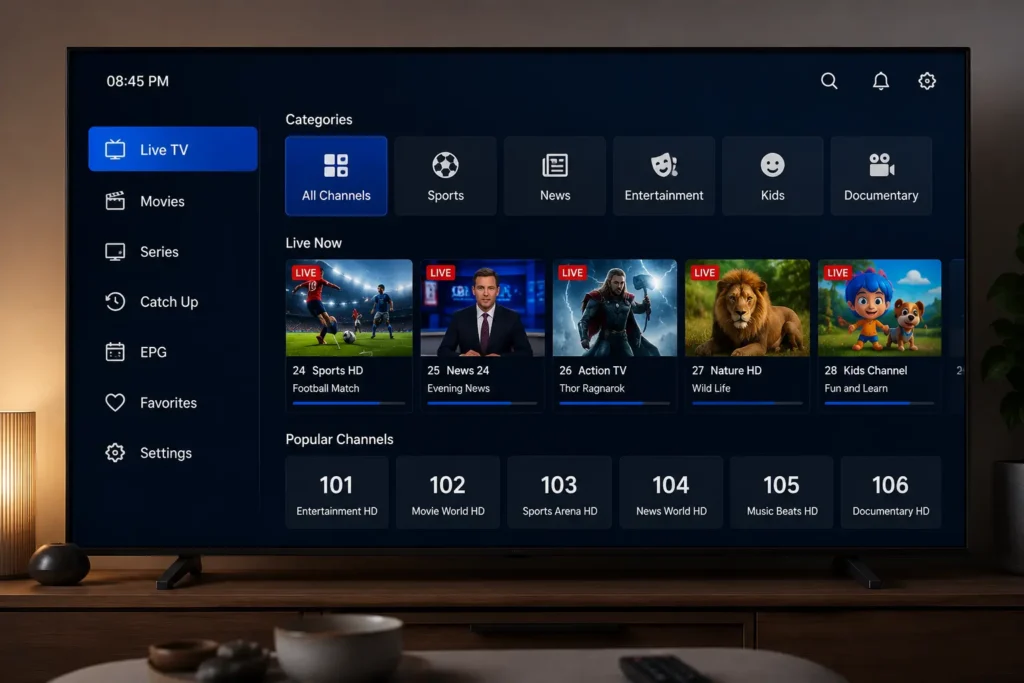
Most subscribers interact with the service through a smart iptv app on their television or streaming box, completely unaware of the credit system operating behind the scenes. From their side, it’s just a login screen and a channel list.
But every renewal they make, every device they add, traces back to a credit being deducted from your balance somewhere upstream. Understanding that chain helps explain why some panels charge extra credits for multi device access while others bundle it in.
Compatibility between panels and popular smart iptv apps varies more than people expect, and it’s rarely documented clearly upfront. Ask a provider directly which apps they’ve tested against before you commit a batch of credits to them.
A Quick Checklist Before You Top Up
- Confirm the panel’s uptime track record over at least the past three months
- Check whether IPTV credits expire, and if so, how long you have to use them
- Ask how the provider sources and licenses its content, and note how they respond
- Test a small batch before buying in bulk, even if the discount looks tempting
- Verify smart iptv app compatibility with the devices your customers actually use
- Compare the per credit cost across at least three providers before deciding
Frequently Asked Questions
How many IPTV credits do I need to start reselling?
Most new resellers start with a modest batch, somewhere between 25 and 50 IPTV credits, to test panel quality before committing to bulk pricing. It’s a reasonable middle ground between testing the waters and getting a meaningful discount. Scaling up once you’ve confirmed stability and compliance makes far more sense than buying big on day one.
Do IPTV credits expire?
It depends entirely on the provider, and this is exactly why reading the terms matters. Some panels enforce a strict expiry window, often 90 to 180 days, while others let credits sit indefinitely until used. Always confirm this before buying a large batch.
What’s the difference between IPTV credits and a subscription price?
IPTV credits are what a reseller pays their panel provider, while the subscription price is what the reseller charges their end customer. The gap between those two figures, minus running costs, is essentially the reseller’s margin.
Can I use IPTV credits across different panel providers?
No, IPTV credits are tied entirely to the panel that issued them. They have no value or function outside that specific reseller system, which is why choosing a stable, transparent provider upfront matters so much.
What should I check before trusting a provider with my IPTV credits?
Beyond pricing and uptime, ask how the provider sources and licenses its content, since that answer tells you a lot about how stable and low risk the relationship will be. A provider unwilling to give a straight answer on that is worth walking away from, regardless of how good their pricing looks.
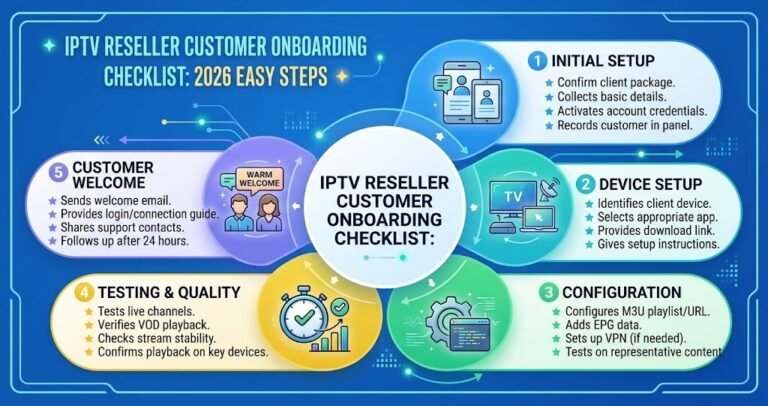
[…] same handful of mistakes show up across almost every IPTV reseller panel operation, regardless of panel provider or credit pack […]
[…] how IPTV credits work → /iptv reseller credits […]