
Contact Us

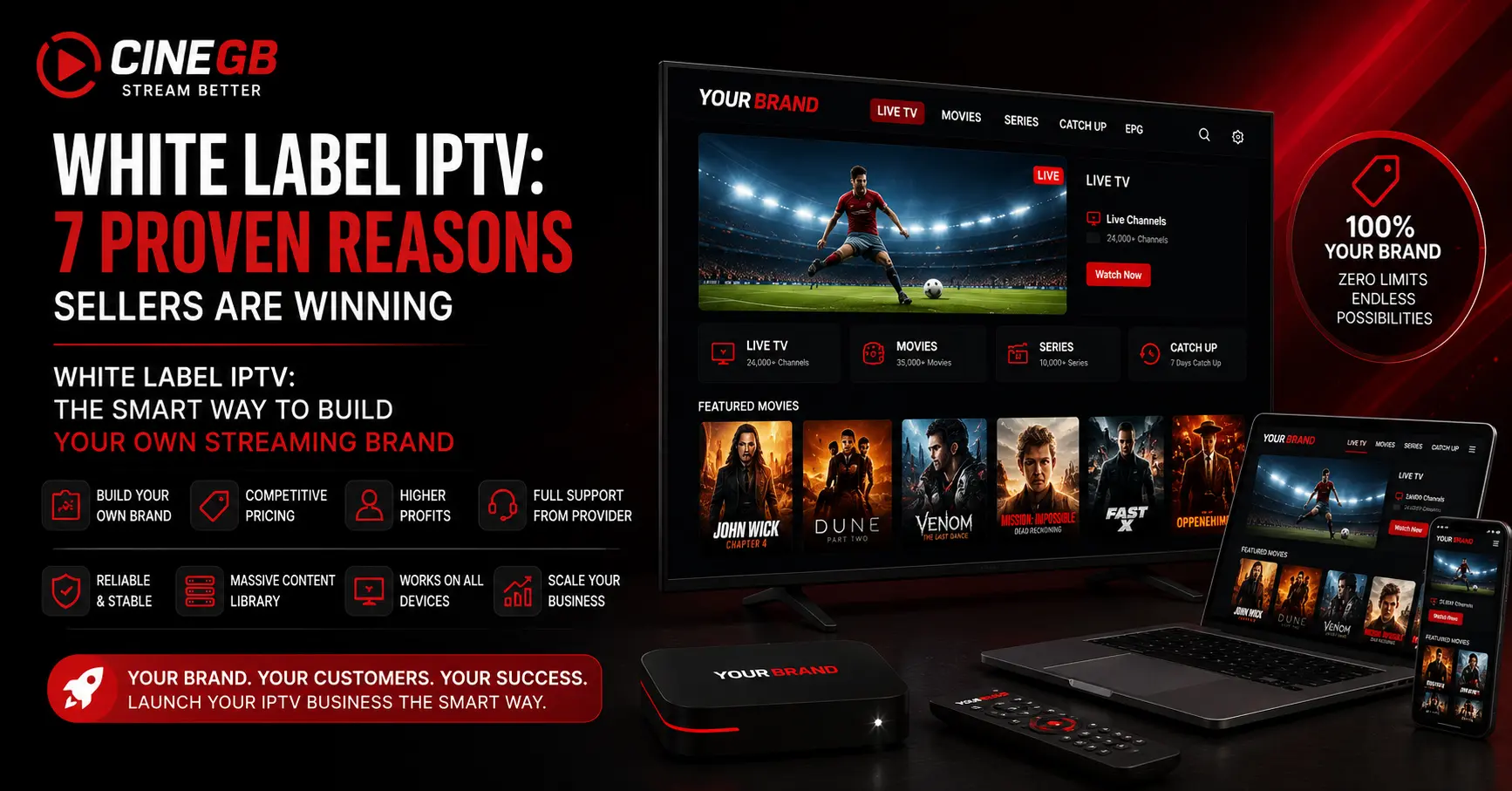
White Label IPTV: The Smart Way to Build Your Own Streaming Brand
I still remember the first time a client asked me, quite bluntly, whether white label IPTV was “just IPTV with a different logo slapped on it.” I laughed, then spent the next twenty minutes explaining why that question undersells what a proper white label IPTV setup actually does for a reseller’s business. It isn’t a sticker on someone else’s product. It’s a full branded storefront, built on infrastructure you don’t have to construct yourself, and it’s quietly become one of the smartest entry points into the streaming reseller world.
If you’ve been circling the idea of starting your own streaming brand but felt intimidated by servers, panels, and content delivery networks, white label IPTV is probably the answer you’ve been looking for without knowing its name. This guide walks through what it is, why it works, how to pick the right iptv panel and iptv provider, and where people trip up. No fluff, no false promises, just what fifteen years around this industry has taught me.
What White Label IPTV Actually Means
At its core, white label IPTV is a service model where a technology vendor builds and maintains the entire streaming infrastructure, the servers, the panel, the apps, the billing tools, while you put your own name, logo, and pricing on top. You never touch the backend. You never worry about server load during a big match weekend. You just run the business.
Is that too good to be true? Not really, though it does depend heavily on who’s behind the curtain. A reputable white label IPTV vendor treats you as a genuine business partner, not just another line item. They’ll hand you a working iptv panel, give you credentials for an iptv provider relationship that’s already stable, and let you decide how to price and market the service to your own audience.
Why So Many Sellers Are Choosing This Route
There’s a reason the phrase white label IPTV keeps popping up in reseller forums and Telegram groups. Building your own streaming infrastructure from the ground up is expensive, technically demanding, and frankly risky if you don’t already understand server architecture, transcoding, and content delivery.
Going white label sidesteps almost all of that. You get:
- A ready-made iptv panel with credit management and customer controls
- Branding tools so your storefront looks nothing like a copy-paste template
- Support from an established iptv provider who already handles uptime and troubleshooting
- A faster path to revenue, often within days rather than months
I’ve watched sellers launch a fully branded service in a single weekend using this model. That’s not a marketing line, that’s just how quickly the pieces come together once you’ve picked the right partner.
White Label IPTV Versus Building Your Own Stack
Here’s where a comparison table earns its keep, because numbers and side-by-side facts explain this better than another paragraph of prose ever could.
| Factor | White Label IPTV | Building From Scratch |
|---|---|---|
| Setup time | Days | Months |
| Technical skill needed | Low | High |
| Upfront cost | Moderate | High |
| Ongoing maintenance | Handled by vendor | Your responsibility |
The table tells its own story, but it’s worth adding this: building your own stack isn’t a bad idea if you have serious capital and a technical team. For most independent sellers though, white label IPTV wins on speed and reduced risk alone.
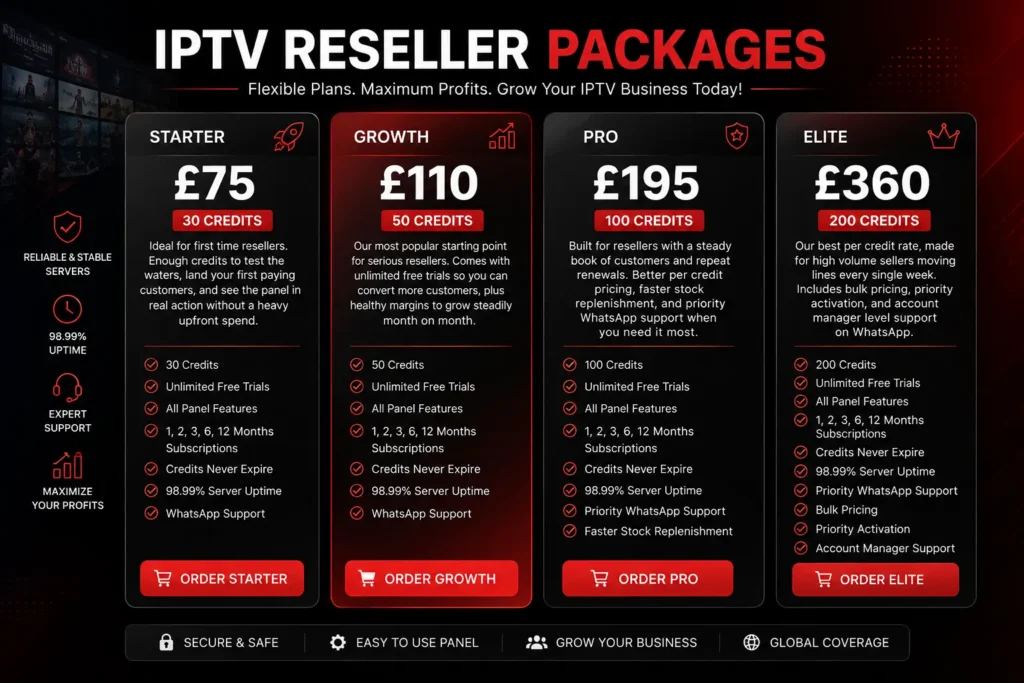
Picking An IPTV Panel And IPTV Provider You Can Trust
This is where people get it wrong most often. Not every iptv panel is built the same, and not every iptv provider is honest about uptime, channel stability, or how they’ll treat you when something breaks at two in the morning.
Look for a provider who’s transparent about their infrastructure. Ask how many concurrent connections the panel can handle and what happens during peak load. Do they offer real support, or a ticket system that goes quiet after the first reply?
Industry coverage from Streaming Media has repeatedly pointed out that reliability, not flashy features, is what separates professional-grade providers from the fly-by-night operators that flood reseller forums. That distinction matters enormously once you’re the one fielding angry customer messages.
Trial periods matter more than people assume. Any serious iptv provider should let you test the service properly before you commit real money to credits. Watch how the stream behaves during a busy evening, check EPG accuracy, and see whether backup servers kick in automatically if one node struggles.
It’s also worth asking who owns the customer relationship if things go sideways. Some vendors quietly reserve the right to contact your customers directly, which can undercut the entire point of running your own branded service. A trustworthy iptv panel provider keeps you firmly in the driver’s seat.
Steps To Launch Your Own Branded Service
Getting started is simpler than most newcomers expect. Here’s roughly how it plays out for a first-time reseller.
- Choose a white label IPTV vendor with a track record and verifiable references
- Set up your branding, logo, app icons, and a simple pricing page
- Load credits through your iptv panel and test the service yourself before selling
- Launch to a small trial audience and gather honest feedback
- Scale marketing once you’re confident in stability and support response times
None of these steps require you to touch a server room. That’s rather the point.
Marketing A Branded Streaming Service
Getting the technical side sorted is only half the job. Customers won’t find you by accident, so you’ll need a plan for actually reaching them.
A few approaches tend to work well for newer sellers:
- Build a simple, professional-looking website rather than relying solely on social media messages
- Ask satisfied customers for referrals, since word of mouth still carries enormous weight in this space
- Offer clear, honest pricing pages instead of forcing people to message you for basic details
- Use short demo clips or screenshots showing the app running smoothly on different devices
Don’t underestimate customer service as a marketing tool in itself. A seller who replies within minutes and resolves issues calmly earns repeat business far more reliably than one chasing new customers constantly while ignoring existing ones. Retention is cheaper than acquisition, and it always will be.
What The Best IPTV Reseller Setups Have In Common
I’ve spent years watching resellers succeed and fail, and the pattern among the best iptv reseller operations is remarkably consistent. They treat this like an actual business, not a side hustle they check once a week.
The best iptv reseller accounts share a few habits. They respond to customers quickly and stay upfront about outages instead of going silent. They reinvest early profit into better branding and marketing rather than pocketing everything immediately. And they never overpromise on channel counts or picture quality just to close a sale.
There’s also a quieter habit that doesn’t get talked about enough: they keep records. Tracking which customers renew, which plans churn fastest, and where support requests cluster tells you far more about your business than gut instinct ever will. Spreadsheets aren’t glamorous, but the best iptv reseller operators treat them as seriously as their marketing budget. Over a year or two, that discipline compounds into a business that’s genuinely easier to run.
Pricing Tiers And The Best IPTV Subscription Structures
Pricing is where a lot of new resellers either underprice themselves into a corner or overprice and lose trust immediately. The best iptv subscription tiers tend to follow a familiar shape, though exact numbers should always reflect your market and costs.
Consider offering:
- A short trial tier so hesitant customers can test the service risk-free
- A mid-range monthly plan that becomes your bread and butter
- A discounted annual plan that rewards loyalty and improves cash flow
Getting the best iptv subscription pricing right isn’t about being the cheapest option in the market. It’s about matching value to price so customers renew instead of vanishing after month one.
The Honest Trade-Offs Nobody Tells You About
Is white label IPTV perfect? No, and I’d be doing you a disservice pretending otherwise. You’re dependent on your vendor’s reliability, which means your reputation rises and falls partly on someone else’s infrastructure decisions.
You’ll also have less control over deep technical customisation than someone running their own servers. If your vendor has an outage during a major sporting weekend, you’ll be the one answering angry messages, not them. That’s a real trade-off worth sitting with before you commit.
There’s also a ceiling on differentiation. Since several resellers might use the same underlying infrastructure, your competitive edge tends to come from branding, pricing, and service rather than the technology itself. That’s not necessarily a bad thing, but it does mean you can’t coast purely on having “better tech” than the seller down the road.
A market analysis piece from Ampere Analysis noted that reseller-driven streaming models have grown steadily precisely because they lower the barrier to entry, even as it flagged reliability as the recurring pain point across the sector.
None of this means the model is a bad choice. It means you should vet your provider as carefully as you’d vet a business partner, because that’s essentially what they are.
A Quick Story From My Own Client Work
A few years back, I worked with a small UK-based seller who’d tried building his own panel from open-source code. He spent four months on it, burned through savings on server costs, and still had constant buffering complaints. We moved him to a proper white label IPTV setup, and within three weeks his churn rate dropped and his support tickets nearly halved.
That’s not a universal outcome, results always vary by market and effort, but it’s a fairly typical arc. The infrastructure headache disappears, and suddenly you can focus on what actually grows a business: marketing, customer service, and pricing strategy.
What stuck with me most from that project wasn’t the technical fix itself. It was watching his confidence come back once he stopped firefighting server issues every evening. He finally had time to actually talk to customers, ask what they wanted, and adjust his offering accordingly. That shift in mindset, from surviving to actually building, is what a stable foundation makes possible.
building a pricing strategy that keeps customers renewing → /iptv reseller pricing
Why The White Label IPTV Route Keeps Winning
Here’s my honest take after years of watching this market shift. White label IPTV isn’t a shortcut for lazy sellers, it’s a smarter allocation of effort. You’re choosing to spend your energy on branding, customer relationships, and growth instead of server logs and firmware updates.
That doesn’t suit everyone. If you genuinely enjoy the technical side and have the capital to match, building your own stack might appeal to you. But for the vast majority of people asking how to start a streaming reseller business this year, white label IPTV remains the more sensible, lower-risk entry point.
Consider, too, how your ambitions might grow over time. Plenty of sellers start small, running things part time alongside another job, then scale into a full operation once revenue justifies it. A flexible iptv provider relationship should be able to grow with you, adding capacity and features rather than forcing you into a rigid plan you outgrow within months. That kind of flexibility rarely gets discussed enough, yet it’s often what separates a seller still running things a year later from one who quietly gave up.
Frequently Asked Questions
Is white label IPTV legal to resell?
Legality depends heavily on your jurisdiction and exactly what content and licensing arrangements sit behind your provider, so this isn’t something to guess at. Always work with a vendor who can speak clearly about their content sourcing and compliance posture. When in doubt, consult local regulations or legal counsel before scaling a service. Treat this as due diligence, not an afterthought.
How much does it cost to start a white label IPTV business?
Costs vary widely depending on the vendor, the credit packages you choose, and how much you invest in branding and marketing upfront. Many sellers start with a modest credit package and reinvest profit as the customer base grows. It’s rarely a huge capital outlay compared to building your own infrastructure. Budget for marketing as much as for the panel itself.
What’s the difference between an iptv panel and an iptv provider?
The iptv provider is the underlying infrastructure and content delivery source, while the iptv panel is the management dashboard you use to handle credits, customers, and branding. Think of the provider as the engine and the panel as the dashboard you actually interact with daily. A good setup pairs a stable provider with an intuitive panel.
How do I find the best iptv reseller program for beginners?
Look for transparency around uptime, clear credit pricing, and responsive support before anything else. Ask existing resellers about their experience if you can find community feedback. The best iptv reseller programs tend to be the ones that treat new sellers as long-term partners rather than one-time credit purchases.
Is the best iptv subscription always the cheapest one?
Not at all, and chasing the lowest price is one of the more common mistakes new resellers make. Reliability, channel stability, and support quality matter more to customer retention than shaving a pound or two off a monthly price. The best iptv subscription tiers balance fair pricing with dependable service.
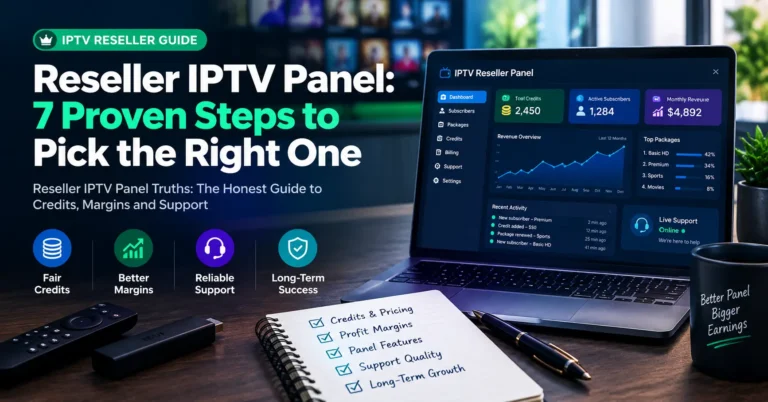
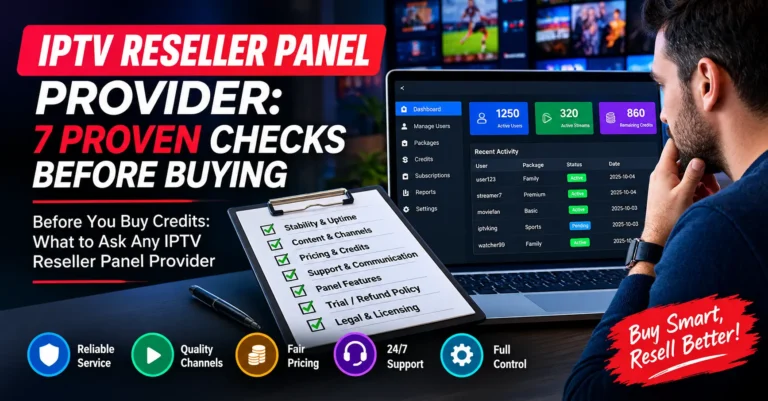
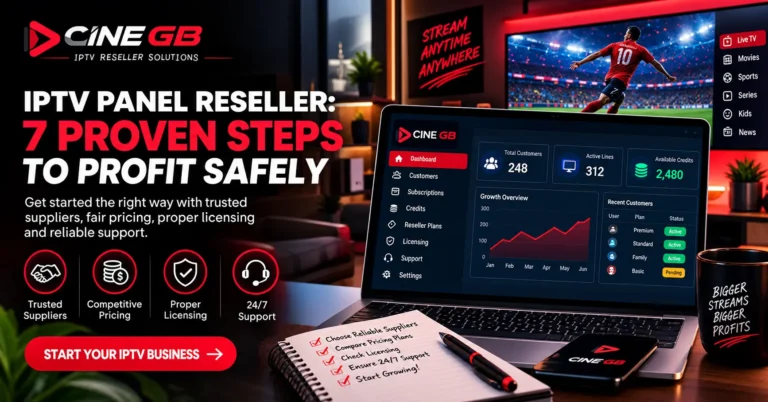
[…] wants to sell subscriptions rather than watch them yourself, the checklist shifts slightly. A demo IPTV reseller panel should let you see how quickly you can create a test customer account, how the credit system is […]