Contact Us

IPTV Reseller Panel Pricing & Credits Explained 2026
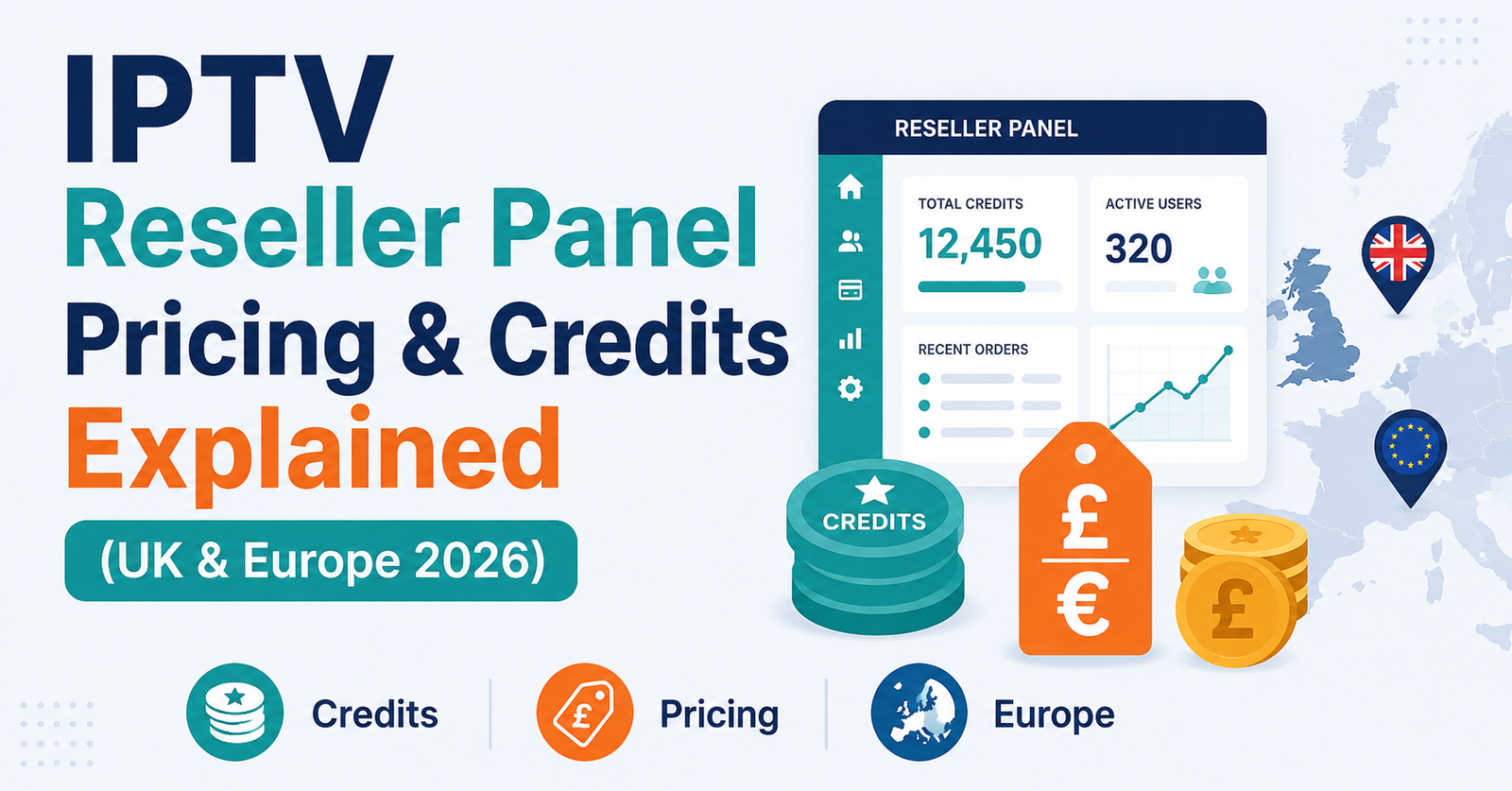
IPTV Reseller Panel Pricing & Credits Explained comes down to one core idea: instead of paying a monthly subscription fee for the panel itself, you buy a batch of credits upfront, and each credit is spent when you activate or renew a customer’s line. The price per credit varies between providers, and it usually drops as you buy in larger batches, but the credit itself is what actually limits how many customers you can serve until you top up again. If you are trying to work out whether a panel’s pricing is fair, the credit cost and what it unlocks matters far more than the headline number on the pricing page.
[ez-toc]
What a Credit Actually Pays For
A credit is not a currency you can spend on anything in the panel. It is tied to a specific action, most commonly creating a new customer line or extending an existing one for a set period, often a month. Some panels also charge a credit for reactivating a line that expired, or for switching a customer between packages. The exact rules differ by provider, which is why reading the panel’s terms before buying credits matters more than comparing price per credit alone.
Two panels selling credits at what looks like the same price can work out very differently once you see what each credit actually covers. One provider might let a single credit renew a line for three months. Another might only cover one month for the same credit price. Without checking that detail, a reseller can end up paying roughly three times as much per customer without realising it.
Why Credit Based Pricing Exists Instead of Flat Subscriptions
Most panels moved to credit systems because it lets a reseller pay only for what they use, rather than a fixed monthly fee regardless of customer count. If you have five active customers this month and fifteen next month, a credit system scales with you. A flat monthly panel fee does not care whether you have five customers or fifty, which can be wasteful in slow months and restrictive in busy ones.
Pro tip: Before buying your first credit pack, ask the provider exactly how many months of service one credit covers for a standard line, and get that answer in writing or a screenshot, not just verbally.
There is a trade off. Credit systems reward resellers who buy in bulk, since the price per credit almost always drops at higher volumes. A reseller just starting out with a handful of customers pays a higher per credit rate than an established reseller topping up hundreds of credits at once. That is not unfair, it is simply how bulk pricing works, but it does mean early stage margins are thinner than they will be later.
What Affects the Price of IPTV Reseller Panel Pricing & Credits
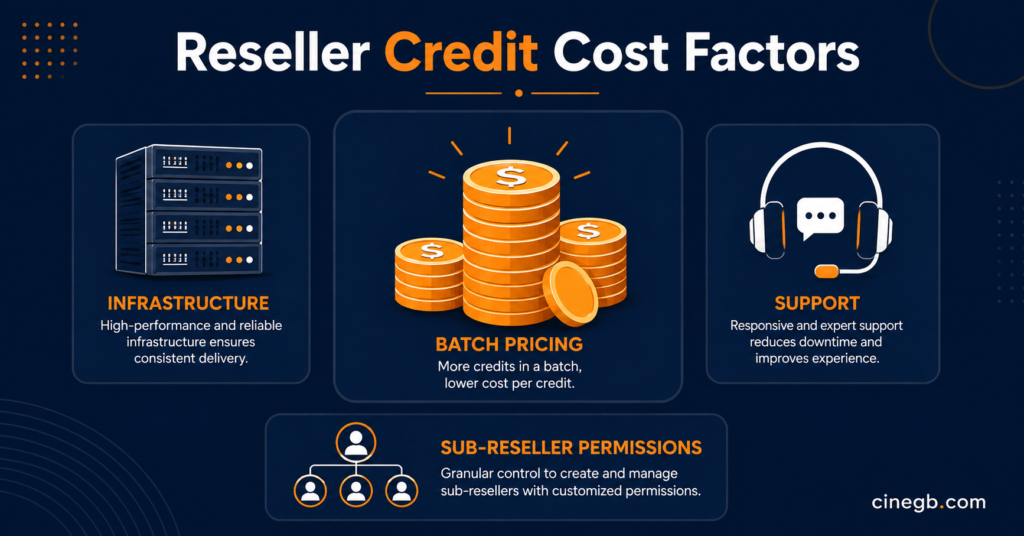
Several factors genuinely move the price, and none of them are fixed across the market:
- Batch size. Larger credit purchases typically bring the per credit cost down, though the exact discount curve is set by each individual panel.
- Panel infrastructure. Panels running their own servers with load balancing and failover generally price differently than panels reselling capacity from someone else further up the chain.
- Included support. Some providers bundle reseller training, a demo panel, or priority support into the credit price. Others charge separately or offer a bare bones panel with minimal help.
- Sub reseller permissions. If the panel lets you create your own sub resellers underneath you, that added flexibility is sometimes reflected in pricing structure.
- Renewal length per credit. As mentioned above, this is the single biggest hidden variable and the one most resellers overlook when comparing prices.
Comparing Illustrative Pricing Structures
To make this concrete without inventing real market figures, here is how two different credit approaches might affect a reseller’s decision making. This is illustrative only, not a claim about actual current pricing from any specific provider.
| Question to Ask | Why It Matters |
|---|---|
| How many months does one credit renew? | Directly changes your real cost per customer, not just the sticker price |
| Do unused credits expire? | Affects how much risk you take buying in bulk ahead of demand |
| Is sub reseller access included or extra? | Changes whether you can scale into a small team later |
| Are there hidden top up minimums? | Small print here can force you into larger purchases than planned |
Pro tip: Ask any provider, including an illustrative example like Skip This, to show you the credit to renewal ratio in writing before you commit to a first purchase. A provider that hesitates to clarify this is worth treating carefully, regardless of how professional their website looks.
Subscriber Side: Why This Still Affects the End Customer
Even though credit pricing is a reseller concern, it eventually shapes what a subscriber pays. A reseller working with a low credit cost and generous renewal length has more room to price competitively and still keep a fair margin. A reseller stuck with expensive credits and short renewal periods either charges customers more or accepts a thin margin, neither of which is sustainable long term. If you are a subscriber wondering why prices vary so much between IPTV sellers offering what looks like the same content, credit economics upstream is often part of the answer.
Reseller Side: Turning Pricing Into a Working Business Model
For resellers, the practical goal is matching credit purchasing to actual demand rather than guessing. Buying a huge batch upfront to chase a lower per credit rate only makes sense if you already have, or are confident you will get, enough customers to use those credits before any expiry window closes. Buying small and topping up often is safer for a new reseller but usually means paying a higher rate per credit until volume builds up.
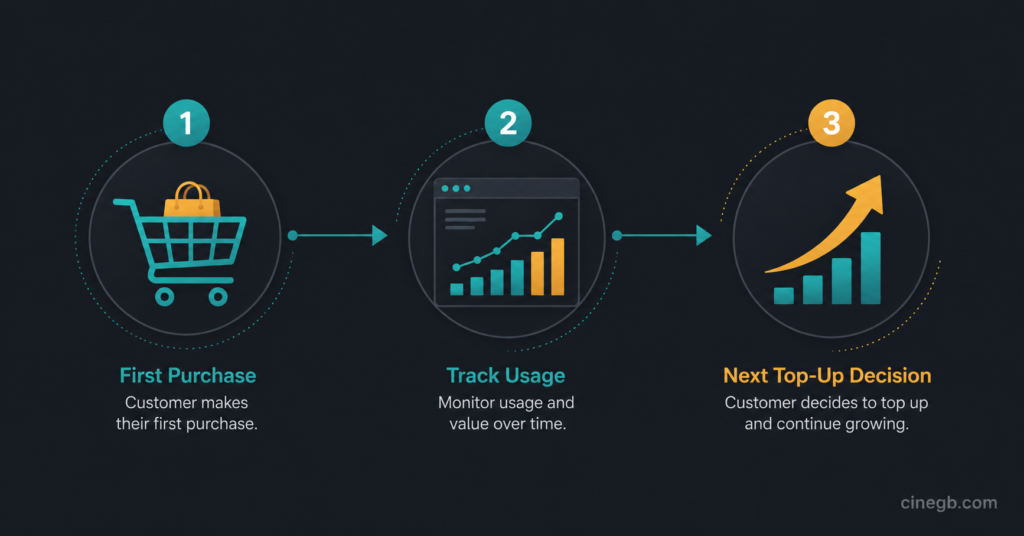
A reasonable approach for someone starting out is to buy a modest first batch, track exactly how many credits get used across a full billing cycle, and use that real usage data to decide the size of the next purchase. This avoids both overcommitting cash to unused credits and running out mid month, which can mean a customer’s line lapsing at an inconvenient time.
Sub Reseller Considerations
If a panel allows sub resellers, pricing gets one layer more complex. A sub reseller typically buys credits from the parent reseller rather than the original panel directly, which means the margin they see depends entirely on the price the parent reseller sets, not the base panel rate. Anyone considering a sub reseller position should ask the parent reseller directly what happens if the parent’s own account is suspended or their credit supply runs out, since a sub reseller has no direct relationship with the panel itself in most setups and limited control if something goes wrong upstream.
Common Mistakes When Evaluating Reseller Credit Pricing
- Comparing price per credit without checking renewal length. A cheaper credit that only covers half the service period is not actually cheaper.
- Buying the largest available batch immediately. Without existing demand, unused credits can sit idle or expire depending on the provider’s terms.
- Ignoring what happens to leftover credits if you stop reselling. Some panels do not refund unused credit balances, which is worth confirming before a large purchase.
- Assuming a professional looking panel interface reflects reliable infrastructure. Interface design and backend stability are not the same thing, and neither confirms legitimate licensing on its own.
Pro tip: Keep a simple spreadsheet tracking credits bought, credits used, and renewal length per credit for every batch. Over two or three purchase cycles this becomes the clearest evidence of whether a provider’s pricing genuinely works for your customer base.
For resellers exploring panel options, Cine GB’s reseller panel page outlines a credit based structure with no monthly panel fee, which is worth comparing against any other provider using the questions above. Those weighing a personal subscription first before committing to reselling can also review current IPTV subscription plans to understand pricing from the customer side before making reseller decisions. General setup and troubleshooting reference material is available through the guides section for anyone new to running IPTV panels day to day.
Legality and Legitimate Operation
IPTV is a delivery technology, and legality depends on whether the content being distributed has proper rights and distribution permission, not on how professional a panel’s pricing page looks or how smooth the checkout process is. A well designed pricing structure and clear credit terms are signs of a well run business, but they are not proof of licensing status. Anyone evaluating a provider, including an illustrative example like Skip This, should ask directly about content rights and distribution permissions rather than assuming a slick interface answers that question for them.
Visible FAQ Section
What is a credit in an IPTV reseller panel?
A credit is a unit spent on a specific panel action, most commonly creating or renewing a customer line for a set period. What exactly counts as one credit varies by provider, so checking the terms directly is important.
Does a lower price per credit always mean better value?
Not necessarily. A lower price per credit can still work out more expensive per customer if that credit only covers a shorter renewal period than a competitor’s credit at a higher headline price.
Do unused reseller credits expire?
This depends entirely on the individual provider’s terms. Some allow credits to sit unused indefinitely, others apply an expiry window, so this should be confirmed before a bulk purchase.
Can sub resellers set their own credit pricing?
Typically yes, within whatever structure the parent reseller allows, since sub resellers usually purchase from the parent account rather than the original panel directly.
Is a cheaper reseller panel automatically a worse choice?
Not automatically. Price alone does not indicate quality or reliability. What matters more is transparency about renewal length, support availability, and infrastructure, alongside the price itself.